Find the right welder for you
Take our product quiz to find out what welder will meet your needs.

Take our product quiz to find out what welder will meet your needs.
Electronics manufacturing demands precise, low-heat joining across delicate components. Electronics welding, particularly micro welding electronics processes, allows manufacturers to create strong, reliable connections without damaging sensitive materials.
Sunstone’s full range of microwelding, solder reflow, and laser solutions supports consistent, repeatable results across applications—from fine magnet wire termination to full PCB assembly and micro-scale repair.
Electronics manufacturing and assembly require highly controlled joining processes to connect conductive materials without damaging sensitive components. These applications range from fine wire termination and sensor fabrication to PCB assembly, connector attachment, and micro-scale repairs.
Traditional methods such as manual soldering often introduce excessive heat, inconsistent results, and operator variability. As components continue to shrink and performance requirements increase, manufacturers are moving toward electronics welding and micro welding electronics techniques that offer tighter control and repeatability.
Sunstone supports a wide range of these applications through multiple joining technologies, including pulse arc welding, resistance welding, thermocompression bonding, parallel gap welding, pulse heat (hot bar) soldering, and laser welding. Each process is suited to specific materials, geometries, and production requirements, allowing manufacturers to match the method to the application rather than forcing a one-size-fits-all approach.
Electronics welding is used across a wide range of applications where precision and heat control are critical.
In connectors, sensors, and microelectronics, fine wires—often between 32 and 46 AWG—must be joined to terminals or pins without damaging insulation or nearby components. Using pulse arc, laser, or resistance welding, manufacturers can create strong electrical connections while maintaining tight control over heat input.
Thermocouples require the joining of dissimilar metals to form a precise sensing junction. Micro welding electronics processes such as pulse arc or laser welding allow these junctions to be formed consistently, ensuring accurate temperature measurement and long-term reliability.
Magnet wire applications in motors, coils, and transformers require reliable electrical connections without time-consuming preprocessing. Thermocompression bonding enables manufacturers to strip insulation and bond the wire in a single step, improving efficiency while maintaining consistency.
When working with PCB assemblies, excessive heat can damage pads, traces, or multilayer structures. Parallel gap welding provides a controlled alternative, allowing wires and small components to be welded directly to PCB pads with minimal thermal exposure.
For applications where solder is required, pulse heat (hot bar) systems provide tightly controlled thermal profiles. This allows solder to reflow consistently across wires, ribbon cables, connectors, and PCB pads—making the process suitable for production environments where repeatability is critical.
In applications requiring high throughput, such as wire-to-pin or cross-wire connections, capacitive discharge welding provides fast, consistent welds. This approach minimizes heat input while maintaining strong mechanical and electrical bonds.
Repairing electronic assemblies without damaging surrounding components is one of the biggest challenges in manufacturing. Micro welding electronics techniques allow operators to reattach leads, fix broken connections, or modify assemblies without replacing entire components.
Laser welding enables non-contact joining of small or complex geometries, including battery tabs, micro housings, and precision metal components. This process is especially valuable when access is limited or when automation is required.
Laser engraving is often used alongside electronics welding processes to permanently mark components with part numbers, lot codes, or identifiers. This supports traceability and quality control without introducing mechanical stress or heat damage.
What are you welding today?
Talk with our team about the right solution for your electronics welding application.
Electronics welding is often driven by the limitations of traditional joining methods. Manufacturers face several recurring challenges when working with sensitive components.
Heat sensitivity is one of the most critical issues. Excessive thermal input can lift PCB pads, degrade insulation, or damage internal structures within components.
Miniaturization compounds this challenge. As components become smaller, tolerances tighten and the margin for error decreases, requiring more precise energy control during the joining process.
Inconsistent results are also common in manual processes. Variability between operators can lead to uneven joint quality, impacting both performance and reliability.
Material complexity adds another layer of difficulty. Electronics often involve dissimilar metals, plated surfaces, or coated wires that do not respond well to traditional soldering or welding techniques.
Finally, production environments require both speed and repeatability. High-volume manufacturing demands processes that can deliver consistent results without slowing throughput or increasing scrap rates.
Micro welding electronics processes are specifically designed to address these challenges by controlling energy delivery at a very small scale.
Precise energy control ensures that only the joint area is affected, protecting surrounding materials and components. This results in a minimal heat-affected zone and reduces the risk of thermal damage.
Short process times further limit heat exposure. Many welding and reflow operations occur in milliseconds, preventing overheating and preserving material integrity.
Repeatability is another key advantage. Programmable systems eliminate much of the variability associated with manual processes, ensuring consistent electrical and mechanical performance across production runs.
Perhaps most importantly, electronics welding offers versatility. With multiple process options available—ranging from thermocompression bonding to laser welding—manufacturers can select the most appropriate method for each specific application.
There is no single process that works for every electronics application. The best results come from matching the joining method to the material, geometry, and production requirements.
Pulse arc welding is often used for fine wire work and micro repair where manual control is important. Resistance and capacitive discharge welding are well suited for high-speed, repeatable production applications such as wire-to-contact welding.
Thermocompression bonding is ideal for enamel-coated magnet wire, while parallel gap welding is commonly used for PCB connections where heat control is critical.
Laser welding provides a non-contact solution for complex geometries or automated environments, and pulse heat systems are preferred for controlled solder reflow applications.
Sunstone offers a range of systems designed to support electronics welding across different applications and production environments.
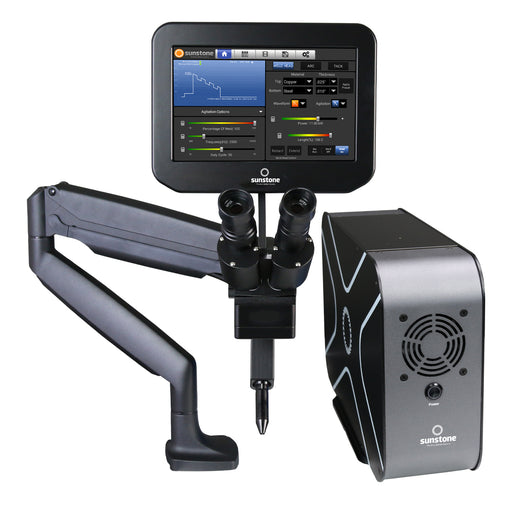
The Orion 200x pulse arc welder is commonly used for fine wire welding, thermocouple fabrication, and micro-scale repair where precision and low heat input are critical.
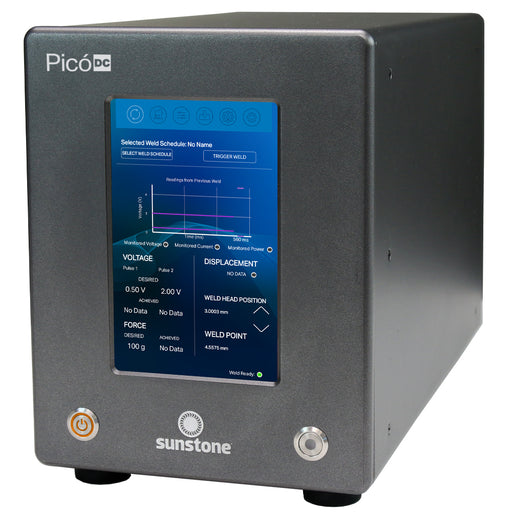
The PICO DC welder supports both thermocompression bonding and parallel gap welding, making it suitable for magnet wire termination and PCB micro-joining applications that require controlled force and current.
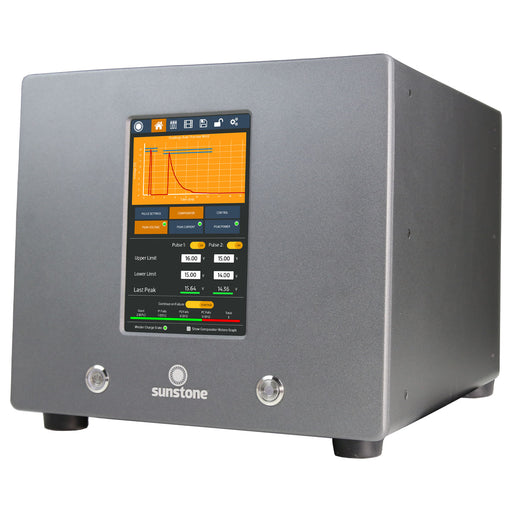
Capacitive discharge welders are ideal for cross-wire and wire-to-contact welding, particularly in high-speed production environments where consistency is essential.
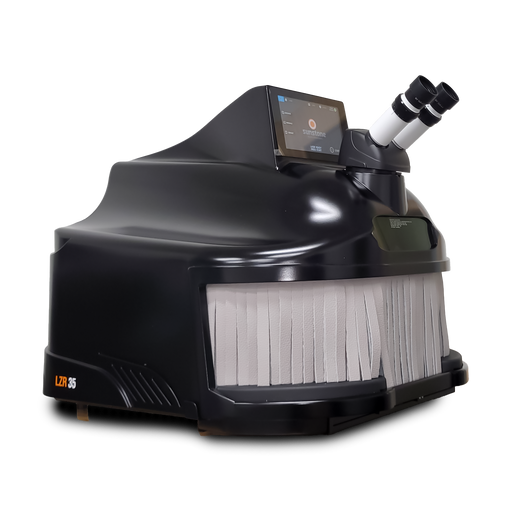
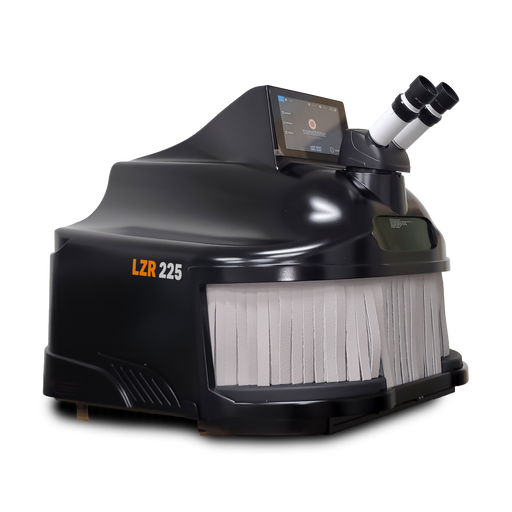
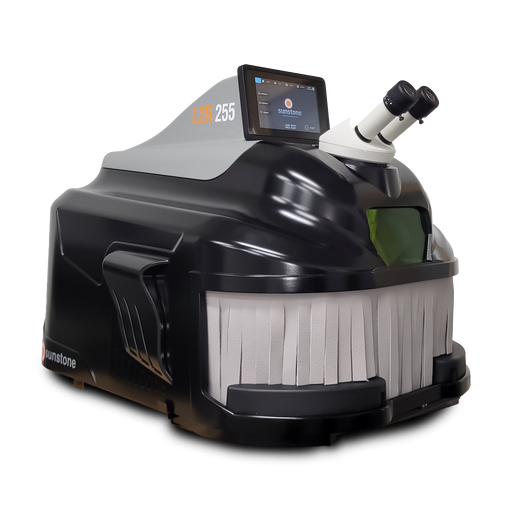
Laser welding systems provide high precision and are well suited for automation or complex geometries where traditional electrode-based processes are not practical.
AVIO pulse heat (hot bar) systems are designed for solder reflow applications, offering precise thermal control for consistent results in production settings.
Electronics welding is most effective in applications involving fine wires, small components, and heat-sensitive assemblies. It is well suited for both prototyping and high-volume production environments where repeatability and process control are important.
However, it is not ideal for large, high-mass joints that require deep heat penetration or for structural welding applications that fall outside the micro-scale.
Several factors influence the success of an electronics welding application.
Material type plays a significant role, as conductivity, plating, and dissimilar metals can affect how energy is transferred during the weld.
Wire size and geometry must also be considered, particularly in fine wire applications where small variations can impact results.
Thermal sensitivity is critical when working with PCBs, adhesives, or insulated materials, all of which can be damaged by excessive heat.
Joint accessibility can determine which process is viable, as some methods require direct electrode contact while others rely on line-of-sight access.
Production volume influences whether a manual or automated solution is more appropriate, and fixturing becomes increasingly important as consistency requirements increase.
Sunstone provides application support to help manufacturers identify the optimal electronics welding solution for their specific needs.
This includes sample evaluation, weld testing, process development, and parameter optimization. Training and onboarding are also available to ensure production teams can implement and maintain consistent processes.
This support helps bridge the gap between initial concept and full-scale production, reducing risk and improving long-term reliability.
Electronics welding is typically preferred when faster cycle times, stronger metallurgical bonds, or reduced heat input are required. Soldering remains useful for certain PCB assembly applications where filler material is necessary.
With the correct process—such as parallel gap welding or pulse heat—energy is localized and controlled, minimizing risk to surrounding components.
Yes. Thermocompression bonding allows insulation to be removed and the wire to be bonded in a single step.
Not always. Laser welding is most useful for highly precise, automated, or hard-to-access joints where other processes are not practical.
Yes. Many systems are designed for integration into automated production lines, supporting high-volume manufacturing with consistent results.
What are you welding today?
Connect with our team for help choosing the best welder for your electronics application.
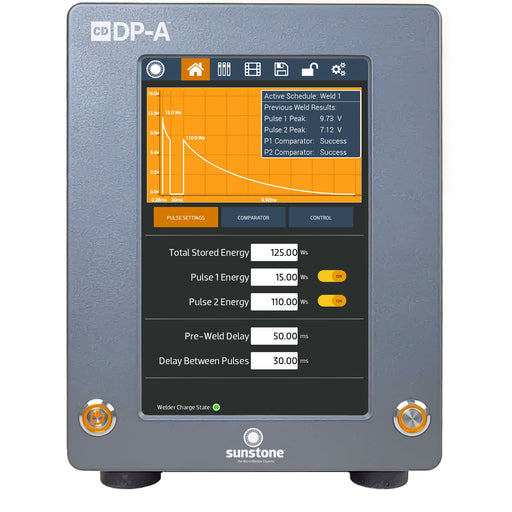
Capacitive Discharge Spot Welder for Battery Tab Welding The CDDP-A is a dual pulse capacitive discharge spot welder designed for precision joining...
View full detailsThe Orion® LZR ECO: Precision Laser Welding at a Budget Price With the ECO version of the Orion LZR benchtop laser welder line, you’ll work faster,...
View full detailsThe Picó DC® Closed-loop Feedback Resistance Welder The Sunstone Pico DC is an advanced, closed-loop feedback direct-current resistance welder spe...
View full detailsADVANCED FINE-SPOT RESISTANCE WELDERS Capacitive Discharge (CD) resistance welders have many advantages over other welder types. Since CD welders u...
View full detailsOrion® LZR 300 Pro Max Stable, High-Energy Laser Welding for Consistent Production Results The LZR 300 Pro Max delivers precise, repeatable laser w...
View full detailsThe Orion® LZR Select: All of the Precision You Expect from a Laser Welder With the Select version of the Orion LZR benchtop laser welder line, you...
View full detailsThe Orion® LZR PRO Benchtop Laser Welder: Get Ready for an Exceptional Laser Welding Experience! With the PRO version of the Orion LZR benchtop las...
View full detailsPA250i Micro TIG Welder Maximum Power!The most powerful Sunstone pulse arc welder delivers 250 joules of energy with precision and accuracy When yo...
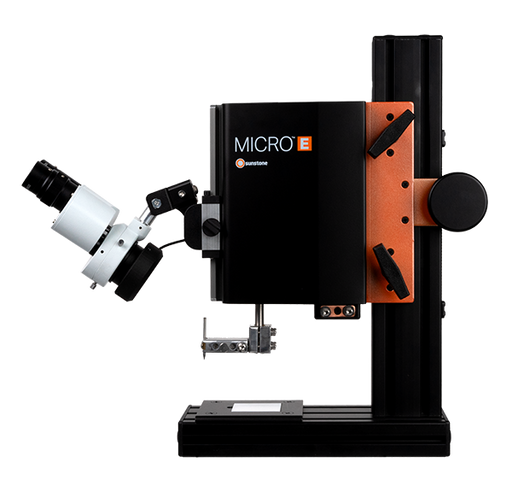
View full detailsSunstone Micro E Weld Head The Sunstone Micro E is an electromagnetic linear motion weld head engineered for ultra-high welding results at the micr...
View full details{"one"=>"Select 2 or 3 items to compare", "other"=>"{{ count }} of 3 items selected"}