Find the right welder for you
Take our product quiz to find out what welder will meet your needs.

Take our product quiz to find out what welder will meet your needs.
Mold and die repair involves restoring worn, damaged, or out-of-spec tooling used in injection molding, stamping, forging, and casting processes. These tools are high-value assets made from hardened tool steels and specialty alloys, where precision and low heat input are critical.
Manufacturers rely on mold and die repair to address issues such as worn edges, damaged features, and tooling that no longer meets design specifications. In many cases, the goal is not just repair, but extending tool life and avoiding the cost and downtime associated with full replacement.
Micro welding enables mold repair welding with extreme precision by allowing operators to add material in highly controlled amounts with minimal heat input. This preserves the integrity of hardened tooling while reducing the risk of distortion, making it especially effective for applications where traditional welding methods fall short.

Mold repair welding is a process used to restore worn or damaged tooling by adding material back to specific areas using controlled welding techniques. It is commonly used in mold and die repair when precision and minimal heat input are required.
Unlike traditional welding methods, mold repair welding focuses on localized material addition, allowing operators to rebuild features without affecting surrounding areas. This makes it especially useful for repairing hardened tool steels and maintaining dimensional accuracy in high-value tooling.
Mold repair welding and die repair welding are used in a variety of scenarios where tooling performance must be restored without compromising dimensional accuracy.
Repeated production cycles cause wear along sealing surfaces, which can lead to flash in molded parts and reduced part quality. In these situations, mold repair welding is used to restore these surfaces by depositing precise filler material exactly where it is needed.
This process is commonly performed on materials such as H13, P20, and S7 tool steels. By rebuilding worn edges without introducing excessive heat, manufacturers can maintain sealing performance while avoiding costly re-machining or full tool replacement.
Chipped edges and corners are a common issue in hardened dies due to impact and repeated stress during operation. Even small defects can significantly impact performance and lead to inconsistencies in formed parts.
Using die repair welding techniques such as pulse arc or laser welding, operators can rebuild missing material with a high degree of control. Once repaired, the area can be lightly machined or polished to restore the original geometry. This approach extends tool life while maintaining performance without requiring replacement.
Tooling often requires modification after initial production runs, either due to machining errors or necessary design changes. Rather than scrapping the tool, mold repair welding allows operators to add material to specific areas and rework localized features.
This includes adjusting dimensions, rebuilding undersized features, and modifying contours without affecting surrounding areas. Micro welding mold repair is particularly effective in these cases because it allows for precise, controlled material addition in small or complex geometries.
What are you welding today?
Talk with our team about the right solution for your mold and die repair work.
Traditional welding processes are often not suitable for mold and die repair because they introduce excessive heat into the material. This can create heat-affected zones that alter the properties of hardened tool steels, leading to distortion, cracking, or loss of dimensional accuracy.
Because molds and dies operate within extremely tight tolerances, even minor deformation can result in significant production issues. For this reason, mold repair welding is used instead of conventional welding methods when precision and control are required.
Micro welding and precision welding systems are designed to provide the level of control required for mold and die repair. By minimizing heat input and allowing for highly localized material deposition, these systems enable repairs that would not be possible with conventional welding methods.
This is why micro welding mold repair is commonly used when working with hardened tool steels, thin features, or complex geometries. For injection mold welding repair and similar applications, this approach allows operators to maintain dimensional stability while restoring worn or damaged areas.
Mold and die repair welding is typically performed on hardened tool steels and specialty alloys that are designed to withstand wear and repeated use in demanding environments.
Common materials include H13, P20, and S7 tool steels, along with other hardened or specialty alloys used in tooling applications. These materials require careful control of heat and weld parameters, which is why precision welding systems are critical for successful repairs.
Mold repair welding is used to address a range of common issues that impact tooling performance and production quality. These problems often develop over time as tools are subjected to repeated use, stress, and wear.
Some of the most common challenges include:
By addressing these issues with controlled welding techniques, manufacturers can restore tooling performance while minimizing downtime and maintaining production efficiency.
Mold repair welding is typically used when tooling damage or wear can be corrected through localized material addition rather than full replacement. This is especially relevant when working with high-value molds and dies where maintaining dimensional accuracy is critical.
In many cases, manufacturers choose mold repair welding when they need to restore worn surfaces, rebuild damaged features, or modify tooling without introducing distortion. Because the process focuses on controlled energy delivery and minimal heat input, it allows repairs to be made while preserving the integrity of hardened materials.
When tooling becomes damaged or worn, manufacturers must decide whether to repair or replace it. Tool replacement can be expensive and time-consuming, often involving long lead times and production delays.
Mold repair welding provides an alternative by allowing targeted repairs that restore functionality without replacing the entire tool. This approach reduces downtime, helps maintain production schedules, and extends the usable life of tooling.
For many applications, mold repair welding is used when maintaining existing tooling is more practical than full replacement.
The best method depends on the application, but micro welding, laser welding, and precision welding systems are commonly used because they allow for controlled heat input and precise material placement.
Yes, hardened tool steels such as H13, P20, and S7 can be repaired using controlled welding techniques. Proper process control is essential to avoid altering material properties or introducing distortion.
Mold repair welding focuses on precision and minimal heat input, allowing for localized repairs on high-value tooling. Unlike traditional welding, it is designed for applications where maintaining dimensional accuracy is critical.
Mold repair welding is typically used when damage can be corrected through localized repair rather than full replacement. It is often chosen to restore tooling performance, reduce downtime, and extend tool life without the cost and lead time of manufacturing new tooling.
What are you welding today?
Connect with our team for help choosing the best welder for your application.
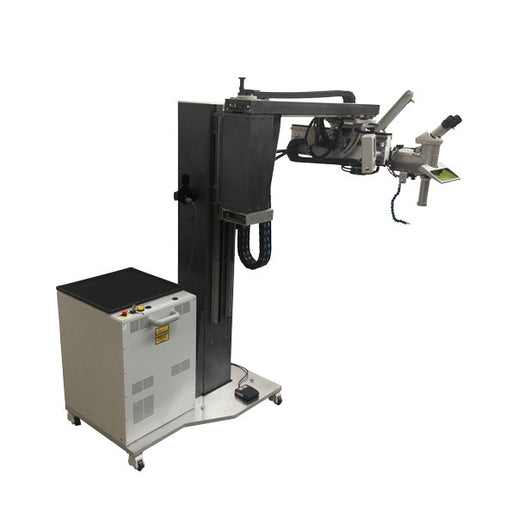
Tackle Any Mold and Die Repair with the DL200 Laser Welders 3-Axis and Tilt Capabilities The most expensive aspect of the plastics industry is the ...
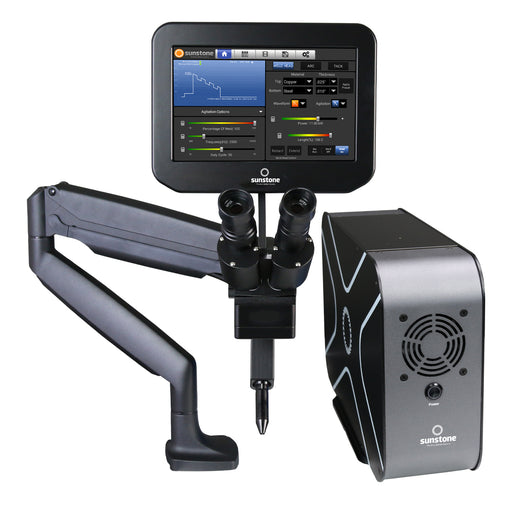
View full detailsPA250i Micro TIG Welder Maximum Power!The most powerful Sunstone pulse arc welder delivers 250 joules of energy with precision and accuracy When yo...
View full detailsTake Control of Mold and Die Repair Expenses with the Orion 200 Combo Laser Welder The costliest process in the plastics business is the creati...
View full details