Find the right welder for you
Take our product quiz to find out what welder will meet your needs.

Take our product quiz to find out what welder will meet your needs.
Precision welding solutions for aerospace components where weight, reliability, traceability, and repeatability matter.
Aerospace manufacturers use precision welding to join, seal, repair, and assemble mission-critical components that may need to perform through vibration, thermal cycling, vacuum exposure, pressure changes, and demanding operating environments. From fine-wire sensor assembly to honeycomb fabrication and high-precision aerospace electronics, the joining process must be controlled enough to protect the part while still meeting mechanical, electrical, and production requirements.
Sunstone® welding technologies give aerospace manufacturers multiple process options, including resistance welding, capacitive discharge welding, pulse arc welding, and laser welding. That range allows the process to be selected around the material, geometry, heat sensitivity, production volume, and performance requirements of the application instead of forcing every part into one welding method.
Need help proving out an aerospace welding application?
Send Sunstone® your application details or sample parts so the team can help evaluate the best welding path before you commit to a process.
Aerospace manufacturing often requires small, consistent welds on parts that cannot tolerate excessive heat input, distortion, contamination, or uncontrolled variation. Components may be lightweight, thin, expensive, difficult to replace, or built from specialty alloys that require careful process development.
Common aerospace welding applications include honeycomb and lightweight structural assemblies, aerospace sensors and thermocouples, avionics and electronic packages, satellite and space hardware, battery and power system components, solar cell interconnections, propulsion and thermal management components, and repair or rework of high-value parts.
Because these applications can vary widely, process selection matters. A honeycomb panel, thermocouple junction, sensor housing, battery tab, and hermetic electronic package may all need precision welding, but they may not need the same welding technology.
Aerospace suppliers are often trying to balance strength, weight, cleanliness, dimensional accuracy, and production repeatability at the same time. Many conventional welding processes introduce too much heat, require excessive fixturing, or create unacceptable distortion for smaller aerospace assemblies.
Typical challenges include distortion from excessive heat, damage to expensive components, difficulty joining thin materials, weld consistency across production lots, strict quality and traceability requirements, dissimilar material combinations, contamination risks around sensitive electronics, and the need to repair high-value parts without changing critical dimensions.
Precision microwelding can help address these challenges by focusing energy at the joint, limiting unnecessary heat spread, supporting small weld sizes, and helping manufacturers develop repeatable weld parameters for qualified production work.
Sunstone® welding systems may be used across several aerospace manufacturing and repair applications. The right process depends on the materials, part thickness, joint access, required weld strength, electrical requirements, inspection standards, automation needs, and heat sensitivity of nearby components.
Honeycomb structures are widely used in aerospace manufacturing because they provide strong strength-to-weight performance. Precision welding may be used for honeycomb panel fabrication, tacking, and assembly, including honeycomb core-to-skin joining, honeycomb segments, engine nacelle structures, control surfaces, thermal shields, and satellite panels.
Materials may include stainless steel, titanium, nickel alloys, Hastelloy, and Inconel. Manufacturers often tack honeycomb cores before brazing or use localized welds to secure structural assemblies while minimizing distortion. For a deeper related resource, see the Sunstone® article on welding technology for aerospace honeycomb core applications.
Common process fit: CD welders, resistance welding, and laser welding may be considered depending on the structure, material, and production requirements.
Thermocouples are used throughout aerospace engines, environmental systems, testing equipment, and thermal monitoring systems. In these applications, reliable junction formation can affect measurement accuracy, response time, and long-term performance.
Precision welding may be used to join fine thermocouple wires, sensor junctions, and aerospace temperature probes made from Type K, Type J, Type T, and nickel-based thermocouple materials. Pulse arc welders, laser welders, and CD spot welders may be evaluated depending on the wire size, material, and production requirements.
Aerospace sensors must maintain electrical integrity while surviving vibration, temperature extremes, pressure changes, and long operational lifetimes. Precision welding may be used to join pressure sensors, vibration sensors, position sensors, navigation components, environmental monitoring systems, sensor housings, leads, and internal components.
Common sensor materials may include stainless steel, nickel alloys, Kovar, and copper alloys. Depending on geometry and production goals, pulse arc welding, laser welding, Pico DC® resistance welding, or CDDP-A resistance welding may be part of the application review.
Mission-critical aerospace electronics often require precision joining methods that limit thermal damage while supporting long-term reliability. Applications can include connectors, shielding assemblies, electronic housings, avionics modules, PCB interconnects, package lids, sensor enclosures, radar packages, and communications packages.
Hermetic and near-hermetic electronic packages are common throughout aerospace and defense systems because sensitive electronics may need protection from moisture, contamination, pressure fluctuations, and harsh operating environments. Materials may include Kovar, stainless steel, nickel-plated alloys, nickel alloys, copper, and other electronic-grade alloys. Laser welding and pulse arc welding are often evaluated for packages and enclosures, while Pico DC® and other resistance welding options may fit smaller electronic joining applications.
Spacecraft and satellite power systems require reliable electrical connections that can withstand launch loads and long-term operation in orbit. Precision welding may be used for solar ribbons, interconnect tabs, cell leads, and bus bars made from copper, nickel, and precious metal conductors.
For small solar interconnects where electrical performance and low heat input are important, Pico DC® resistance welding may be considered as part of the application review.
Modern aircraft, satellites, and defense systems increasingly depend on advanced battery and power distribution assemblies. Precision welding may be used for battery tabs, cell interconnects, bus bars, and power distribution components made from nickel, copper, aluminum, and battery-grade alloys.
Laser welders, CD welders, and pulse arc welders may all be evaluated depending on the battery format, joint design, material stack-up, and production needs. For related equipment, review Sunstone® battery welding systems.
Repairing expensive aerospace components may be preferable to replacement when dimensional tolerances can be maintained and the repair process can be validated. Precision welding may support repair and rework of precision machined features, sensor housings, aerospace tooling, and thin-wall components made from titanium, Inconel, stainless steel, and nickel alloys.
Pulse arc welders and laser welders may be considered for repair and rework where controlled heat input, operator visibility, and precision are important.
Have a sample part or difficult joining requirement?
Use the free evaluation path for sample testing, or contact Sunstone® if you are still defining the application and need help deciding what information to gather.
Aerospace applications do not all point to one welding technology. The best fit depends on the material, material thickness, joint accessibility, required weld strength, electrical requirements, inspection standards, automation needs, and whether nearby components are sensitive to heat.
Resistance welders and CD welders may be a strong fit for honeycomb tacking, fine spot welding, battery connections, thin metal joining, and applications where speed and controlled energy delivery are important. Pulse arc welders may fit thermocouples, sensor assemblies, repair work, and small mechanical assemblies where operators need flexible manual control. Laser welders may be considered for sensor housings, electronic packages, aerospace batteries, precision assemblies, structural components, and automated production where maximum precision and scalability are required.
For ultra-low heat input and electrical performance on fine parts, Pico DC® may be evaluated for solar cell interconnects, fine wire welding, sensor leads, electrode welding, and precision aerospace electronics. For applications that need flexible hand control, thermocouple work, or small repair and rework, pulse arc welders may be a better direction.
Aerospace microwelding is often a strong fit for thin metals, precision assemblies, high-value components, aerospace electronics, sensors, thermocouples, honeycomb structures, battery assemblies, solar cell manufacturing, and titanium or nickel alloy applications. These are the kinds of parts where controlled energy delivery, small weld size, and process repeatability can create real production value.
It may not be the right fit for heavy structural weldments, large thick-section fabrication, aircraft frame welding that requires deep structural penetration, or applications better suited for traditional arc welding processes. If the application is in the gray area, sample testing is usually the clearest way to determine fit before equipment or process decisions are made.
Successful aerospace welding projects usually begin with a careful review of the material type, material thickness, joint accessibility, required weld strength, electrical requirements, production volume, inspection requirements, automation needs, nearby heat-sensitive components, and traceability or validation requirements.
Common aerospace materials include titanium, stainless steel, Inconel, Hastelloy, nickel alloys, copper alloys, Kovar, and aluminum alloys. Material combinations, plating, part geometry, and cleanliness requirements can all affect the final welding recommendation, so Sunstone® typically recommends application review or sample testing before production implementation.
Because aerospace applications often involve unique materials, qualification requirements, and part-specific constraints, application testing is frequently the fastest path to identifying the right welding process. Sunstone® works with aerospace manufacturers to evaluate application feasibility, perform sample testing, develop weld schedules, recommend appropriate equipment, validate process performance, and support production implementation.
The goal is to help manufacturers move from “Can this be welded?” to a more useful answer: which process is most appropriate, what variables need to be controlled, and what testing should happen before production adoption.
Yes, many aerospace-grade materials can be welded depending on geometry and application. Common materials include titanium, stainless steel, nickel alloys, copper alloys, Kovar, and other specialty aerospace materials.
No. Laser welding offers strong precision and scalability, but resistance welding, CD welding, and pulse arc welding may be better solutions for certain aerospace assemblies. The right choice depends on the part, material, access, heat sensitivity, and production goals.
Yes. Honeycomb tacking and assembly are established aerospace applications commonly evaluated with resistance welding and laser welding technologies. The right process depends on the honeycomb material, joint design, and production requirements.
Yes. Pulse arc and precision resistance welding systems are commonly used for thermocouple junction formation. The best system depends on wire material, wire size, junction requirements, and production volume.
In many cases, yes. Precision energy control can help minimize the heat-affected area compared to broader, less controlled welding methods. Final suitability should be confirmed through application review and sample testing.
Yes. Application evaluation and sample testing can help determine whether Pico DC®, CD welding, pulse arc welding, or laser welding is the best fit for a specific aerospace application.
Whether you are welding honeycomb structures, thermocouples, aerospace sensors, avionics, hermetic packages, solar interconnects, battery assemblies, or high-value repair parts, Sunstone® can help review the application and recommend a process path.
Ready to evaluate your aerospace welding application?
Start with sample testing, request equipment pricing, or contact Sunstone® if you are still deciding which path makes the most sense.
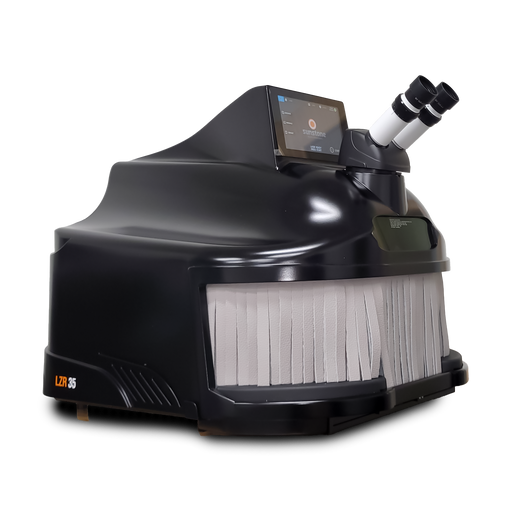
The Orion® LZR ECO: Precision Laser Welding at a Budget Price With the ECO version of the Orion LZR benchtop laser welder line, you’ll work faster,...
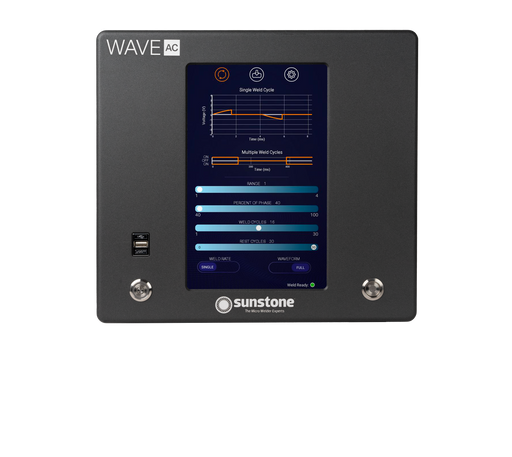
View full detailsWave AC: The Worlds Most Advanced AC Welder The Sunstone Wave AC is the worlds most advanced AC resistance welder capable of delivering up to 2,700...
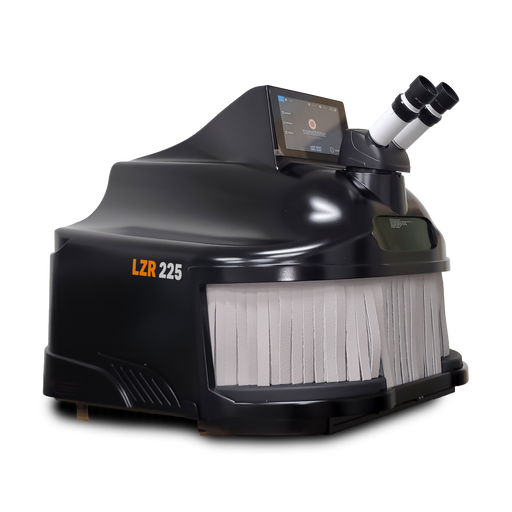
View full detailsOrion® LZR 300 Pro Max Stable, High-Energy Laser Welding for Consistent Production Results The LZR 300 Pro Max delivers precise, repeatable laser w...
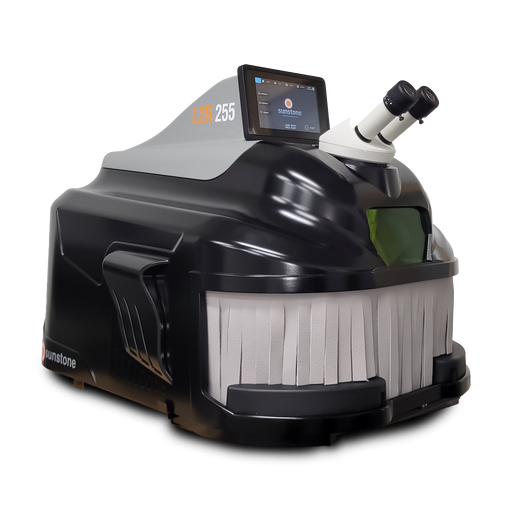
View full detailsThe Orion® LZR Select: All of the Precision You Expect from a Laser Welder With the Select version of the Orion LZR benchtop laser welder line, you...
View full detailsThe Orion® LZR PRO Benchtop Laser Welder: Get Ready for an Exceptional Laser Welding Experience! With the PRO version of the Orion LZR benchtop las...
View full details